• Commerce
  • Citations
  • Copie
  • Concours
  • 24/7
  • Calendrier
  • F&Q
  • Chat
Filtres
SYMBOLE
DERNIER
OFFRE
DEMANDER
HAUT
FAIBLE
CHANGEMENT NET.
%CHG.
SPREAD
SOURCE
SPX
S&P 500 Index
7449.94
7449.94
7449.94
7465.96
7389.48
+16.98
+ 0.23%
--
--
DJI
Dow Jones Industrial Average
50355.15
50355.15
50355.15
50381.41
49697.47
+345.81
+ 0.69%
--
--
IXIC
NASDAQ Composite Index
26313.80
26313.80
26313.80
26403.57
26039.37
+43.45
+ 0.17%
--
--
USDX
US Dollar Index
99.050
99.050
99.130
99.430
98.970
-0.500
-0.50%
--
--
EURUSD
Euro / US Dollar
1.16251
1.16251
1.16258
1.16354
1.15761
+0.00002
0.00%
--
--
GBPUSD
Pound Sterling / US Dollar
1.34448
1.34448
1.34456
1.34545
1.33915
+0.00114
+ 0.08%
--
--
XAUUSD
Gold / US Dollar
4545.97
4545.97
4546.40
4570.85
4488.57
+1.97
+ 0.04%
--
--
WTI
Light Sweet Crude Oil
95.588
95.588
95.618
101.643
94.985
-2.617
-2.66%
--
--

Compte Communautaire

Comptes de signaux
--
Comptes de bénéfices
--
Comptes de pertes
--
Voir plus

Devenez un fournisseur de signaux

Vendez des signaux et obtenez des revenus

Voir plus

Guide du Copy Trading

Commencez facilement et en toute confiance

Voir plus

Comptes de Signaux pour Membres

Tous les Comptes de Signaux

Meilleur Retour
  • Meilleur Retour
  • Meilleur P/L
  • Meilleur MDD
Passé 1S
  • Passé 1S
  • Passé 1M
  • Passé 1A

All Contests

  • Tous
  • Recommander
  • Actions
  • Cryptomonnaies
  • Banques centrales
  • Mises à jour de Trump
  • Actualités en vedette
Actualités à la une uniquement
Partager

Le ministre russe des Affaires étrangères s'entretient avec le vice-président palestinien au sujet de la situation à Gaza.

Partager

L'action d'IBM (IBM.N) a progressé de plus de 11 % après que la société a reçu des fonds de l'administration Trump.

Partager

Le ministre cubain des Affaires étrangères affirme que le secrétaire d'État américain Rubio sait que les mesures coercitives unilatérales constituent un obstacle majeur au développement économique de Cuba.

Partager

Ministre cubain des Affaires étrangères : Les États-Unis incitent au désespoir et à l’effondrement économique de leur peuple

Partager

Le ministre cubain des Affaires étrangères affirme que le secrétaire d'État américain Rubio a encore menti, dans le but de provoquer une confrontation militaire.

Partager

Barkin, de la Réserve fédérale : les rendements obligataires restent dans une fourchette raisonnable

Partager

Banque fédérale de réserve de Barkin : Il est difficile de tirer des conclusions sur les impacts à court et à long terme de l’intelligence artificielle

Partager

Banque fédérale de réserve de Barkin : Je ne pense pas que le moment soit venu de fournir des indications prospectives fermes.

Partager

Barkin, de la Réserve fédérale : n’a pas tendance à surestimer les risques liés à l’inflation ou à l’emploi

Partager

Le président de la Réserve fédérale, Barkin : les employeurs hors du secteur des logiciels n’ont pas encore réduit leurs effectifs en raison de l’intelligence artificielle

Partager

Barkin, président de la Réserve fédérale : inquiet des risques à double sens qui pèsent sur la mission de la Fed

Partager

Banque fédérale de réserve de Barkin : Nous sommes encouragés par la récente croissance de l’emploi, mais il n’est pas difficile d’imaginer les pertes d’emplois que l’intelligence artificielle pourrait engendrer.

Partager

Les cours internationaux du pétrole ont continué de baisser, le brut américain franchissant la barre des 96 dollars le baril. Les trois principaux indices boursiers ont progressé régulièrement : le Dow Jones a gagné 0,6 %, tandis que le Nasdaq et le S&P 500 ont progressé de plus de 0,4 % chacun. Parmi les valeurs composant ces indices, ARM a bondi de plus de 13 %, Lumentum et BE ont progressé d’environ 12 %, SanDisk a grimpé de plus de 10 % et Micron Technology a gagné près de 4 %.

Partager

Le prix du pétrole brut WTI a encore chuté de 2 % en séance, s'établissant actuellement à 100,45 dollars le baril. Le prix du pétrole brut Brent est quant à lui en baisse de 1,7 %.

Partager

Le rendement des obligations du Trésor américain à 30 ans a chuté à 5,101 % sur fond de rumeurs concernant un accord final entre les États-Unis et l'Iran. Le rendement des obligations du Trésor américain à 2 ans s'est établi près de son plus bas niveau de la journée, à 4,061 %, tandis que celui des obligations à 10 ans a reculé à 4,569 %.

Partager

Le cours de l'or au comptant a brièvement progressé, atteignant un sommet de 4 540 $ l'once, avant de retomber à 4 536 $ l'once ; l'indice du dollar américain (DXY) a brièvement reculé, atteignant un plancher de 99,17.

Partager

Les prix du pétrole brut WTI et Brent ont tous deux chuté de plus de 1 dollar à court terme, s'établissant actuellement à 101,8 dollars et 101,7 dollars le baril respectivement.

Partager

Selon l'agence de presse de la République islamique (ILNA), les États-Unis et l'Iran sont parvenus à un accord de principe négocié par le Pakistan, qui devrait être annoncé dans les prochaines heures.

Partager

Le département du Trésor américain a imposé des sanctions à neuf personnes au Liban pour obstruction au processus de paix et entrave au désarmement du Hezbollah.

Partager

Le Trésor américain a mis aux enchères pour 19 milliards de dollars de titres du Trésor indexés sur l'inflation (TIPS) à 10 ans, avec un taux d'adjudication de 2,169 % et un ratio de couverture de 2,52 %.

TEMPS
ACTE
FCST
PRÉCÉDENT
IMPACT
Japon Commandes de machines de base YoY (Mars)

A:--

F: --

P: --

USDJPY
  • USDJPY
  • XAUUSD
  • XAGUSD
  • WTI
  • USDX
Japon Commandes de machines de base MoM (Mars)

A:--

F: --

P: --

USDJPY
  • USDJPY
  • XAUUSD
  • XAGUSD
  • WTI
  • USDX
Australie Attentes d'inflation des consommateurs (Mai)

A:--

F: --

P: --

AUDUSD
  • AUDUSD
  • XAUUSD
  • XAGUSD
  • WTI
  • USDX
Australie Taux de participation à l'emploi (SA) (Avril)

A:--

F: --

P: --

AUDUSD
  • AUDUSD
  • XAUUSD
  • XAGUSD
  • WTI
  • USDX
Australie Emploi à temps plein (SA) (Avril)

A:--

F: --

P: --
AUDUSD
  • AUDUSD
  • XAUUSD
  • XAGUSD
  • WTI
  • USDX
Australie Taux de chômage (SA) (Avril)

A:--

F: --

P: --

AUDUSD
  • AUDUSD
  • XAUUSD
  • XAGUSD
  • WTI
  • USDX
Australie Taux de participation à l'emploi (SA) (Avril)

A:--

F: --

P: --
AUDUSD
  • AUDUSD
  • XAUUSD
  • XAGUSD
  • WTI
  • USDX
Zone Euro Compte courant (hors SA) (Mars)

A:--

F: --

P: --

EURUSD
  • EURUSD
  • XAUUSD
  • XAGUSD
  • WTI
  • USDX
Zone Euro Compte courant (SA) (Mars)

A:--

F: --

P: --

EURUSD
  • EURUSD
  • XAUUSD
  • XAGUSD
  • WTI
  • USDX
ROYAUME-UNI Rendement de l'adjudication d'obligations à 10 ans «

A:--

F: --

P: --

GBPUSD
  • GBPUSD
  • XAUUSD
  • XAGUSD
  • WTI
  • USDX
Zone Euro Production dans le secteur de la construction en glissement annuel (Mars)

A:--

F: --

P: --

EURUSD
  • EURUSD
  • XAUUSD
  • XAGUSD
  • WTI
  • USDX
Zone Euro Coût du travail YoY (Premier trimestre)

A:--

F: --

P: --

EURUSD
  • EURUSD
  • XAUUSD
  • XAGUSD
  • WTI
  • USDX
Zone Euro Production dans le secteur de la construction MoM (SA) (Mars)

A:--

F: --

P: --
EURUSD
  • EURUSD
  • XAUUSD
  • XAGUSD
  • WTI
  • USDX
ROYAUME-UNI CBI Tendances industrielles - Commandes (Mai)

A:--

F: --

P: --

GBPUSD
  • GBPUSD
  • XAUUSD
  • XAGUSD
  • WTI
  • USDX
ROYAUME-UNI CBI Attentes concernant les prix dans l'industrie (Mai)

A:--

F: --

P: --

GBPUSD
  • GBPUSD
  • XAUUSD
  • XAGUSD
  • WTI
  • USDX
Mexique Ventes au détail MoM (Mars)

A:--

F: --

P: --

XAUUSD
  • XAUUSD
  • XAGUSD
  • WTI
  • USDX
U.S. Indice de l'emploi manufacturier de la Fed de Philadelphie (Mai)

A:--

F: --

P: --

USDX
  • USDX
  • XAUUSD
  • XAGUSD
  • WTI
U.S. Permis de construire MoM (SA) (Avril)

A:--

F: --

P: --
USDX
  • USDX
  • XAUUSD
  • XAGUSD
  • WTI
U.S. Mises en chantier de nouveaux logements annualisées en glissement mensuel (SA) (Avril)

A:--

F: --

P: --
USDX
  • USDX
  • XAUUSD
  • XAGUSD
  • WTI
U.S. Total des permis de construire (SA) (Avril)

A:--

F: --

P: --

USDX
  • USDX
  • XAUUSD
  • XAGUSD
  • WTI
U.S. Mises en chantier annuelles de logements neufs (SA) (Avril)

A:--

F: --

P: --
USDX
  • USDX
  • XAUUSD
  • XAGUSD
  • WTI
U.S. Demandes hebdomadaires d'allocations chômage (SA)

A:--

F: --

P: --
XAUUSD
  • XAUUSD
  • XAGUSD
  • WTI
  • USDX
U.S. Demandes hebdomadaires initiales d'allocations chômage (SA)

A:--

F: --

P: --
XAUUSD
  • XAUUSD
  • XAGUSD
  • WTI
  • USDX
U.S. Demandes hebdomadaires initiales d'allocations chômage, moyenne sur 4 semaines (SA)

A:--

F: --

P: --
XAUUSD
  • XAUUSD
  • XAGUSD
  • WTI
  • USDX
U.S. Indice d'activité de la Fed de Philadelphie (SA) (Mai)

A:--

F: --

P: --

USDX
  • USDX
  • XAUUSD
  • XAGUSD
  • WTI
U.S. EIA hebdomadaire Natural Gas Stocks Variation

A:--

F: --

P: --

WTI
  • WTI
  • XAUUSD
  • XAGUSD
  • USDX
U.S. Indice de la production manufacturière de la Fed du Kansas (Mai)

A:--

F: --

P: --

USDX
  • USDX
  • XAUUSD
  • XAGUSD
  • WTI
U.S. Indice composite de la production manufacturière de la Fed du Kansas (Mai)

A:--

F: --

P: --

USDX
  • USDX
  • XAUUSD
  • XAGUSD
  • WTI
Le gouverneur de la BOE Bailey parle
Le président de la Réserve fédérale de Richmond, Barkin, a prononcé un discours.
U.S. Vente aux enchères de TIPS à 10 ans Rendement moyen rendement

A:--

F: --

P: --

XAUUSD
  • XAUUSD
  • XAGUSD
  • WTI
  • USDX
U.S. Détention hebdomadaire de bons du Trésor par les banques centrales étrangères

--

F: --

P: --

ROYAUME-UNI Indice GfK de confiance des consommateurs (Mai)

--

F: --

P: --

Japon IPC MoM (Avril)

--

F: --

P: --

Japon IPC national MoM (Avril)

--

F: --

P: --

Japon Indice des prix à la consommation (IPC) national en glissement annuel (Avril)

--

F: --

P: --

Japon National Core CPI YoY (Avril)

--

F: --

P: --

Japon National CPI MoM (Not SA) (Avril)

--

F: --

P: --

Lane, économiste en chef de la BCE, prend la parole.
ROYAUME-UNI Ventes au détail MoM (SA) (Avril)

--

F: --

P: --

ROYAUME-UNI Ventes au détail YoY (SA) (Avril)

--

F: --

P: --

Allemagne Indice GfK de confiance des consommateurs (SA) (Juin)

--

F: --

P: --

ROYAUME-UNI Chiffre d'affaires du commerce de détail en glissement annuel (SA) (Avril)

--

F: --

P: --

Lane, économiste en chef de la BCE, prend la parole.
Turquie Utilisation des capacités (Mai)

--

F: --

P: --

Turquie Balance commerciale (Avril)

--

F: --

P: --

Allemagne Indice Ifo de la situation actuelle des affaires (SA) (Mai)

--

F: --

P: --

Allemagne Indice Ifo des prévisions des entreprises (SA) (Mai)

--

F: --

P: --

Allemagne Indice IFO du climat des affaires (SA) (Mai)

--

F: --

P: --

Inde Croissance des dépôts YoY

--

F: --

P: --

Mexique Indice de l'activité économique en glissement annuel (Mars)

--

F: --

P: --

Canada Indice des prix des produits industriels YoY (Avril)

--

F: --

P: --

Canada Ventes au détail MoM (SA) (Mars)

--

F: --

P: --

Canada Indice des prix des produits industriels MoM (Avril)

--

F: --

P: --

Canada Ventes de détail MoM (SA) (Mars)

--

F: --

P: --

U.S. Indicateurs avancés du Conference Board MoM (Avril)

--

F: --

P: --

U.S. Indicateurs avancés du Conference Board (Avril)

--

F: --

P: --

U.S. Indicateurs de synchronisation du Conference Board MoM (Avril)

--

F: --

P: --

U.S. Indicateurs retardés du Conference Board MoM (Avril)

--

F: --

P: --

U.S. Total hebdomadaire des forages

--

F: --

P: --

U.S. Forage hebdomadaire de pétrole total

--

F: --

P: --

F&Q avec des Experts
    • Tous
    • Salons de discussion
    • Groupes
    • Amis
    3DX cheetah flag
    3DX cheetah
    @Gibran Gibprepare a place for me in you upper chamber . we shall be breaking bred soon.
    I will need just one thing from you . you play me key F minor . and sing me the same song i see on that picture . then every money i make in your house will be given to you
    Jamolla flag
    SlowBear ⛅
    @Jamolla Alot is happening, i see why you are very skeptical - Headlines rules the market now
    @SlowBear ⛅What worries me more is bond yields.
    Jamolla flag
    30-year yield climbing again is not a small thing
    Gibran Gib flag
    3DX cheetah
    I will need just one thing from you . you play me key F minor . and sing me the same song i see on that picture . then every money i make in your house will be given to you
    @3DX cheetah wow itu akan sangat menyenangkan paman silver
    SlowBear ⛅ flag
    Jamolla
    @SlowBear ⛅What worries me more is bond yields.
    @Jamolla bro, i could not hold my shout when i checked 10y-yeild at the weekend
    SlowBear ⛅ flag
    Jamolla
    30-year yield climbing again is not a small thing
    @JamollaIt si is begining to look like someone somewhere is doing al of these on pupose
    3DX cheetah flag
    Gibran Gib
    @3DX cheetah wow itu akan sangat menyenangkan paman silver
    @Gibran GibI tell you
    umer flag
    gold level 4660 target
    umer flag
    bulls in power on gold
    srinivas flag
    4526... of gold looks like it is a bull trap , if price breaks this point, it will be moving towards 4468
    srinivas flag
    umer
    bulls in power on gold
    @umer oh how?
    3DX cheetah flag
    buyers are winning
    umer flag
    yes me srinivas
    umer flag
    yes mr srinivas ???
    umer flag
    4622 4650 or 4660 to 4670 levels next on gold
    umer flag
    4588 confirmed.
    EuroTrader flag
    3DX cheetah
    buyers are winning
    @3DX cheetahthey are clearly the favorites at this time, lets see how it plays out over asis
    EuroTrader flag
    3DX cheetah
    buyers are winning
    @3DX cheetahgold bulls are really not taking it easy on the bears
    "Mickey " a rappelé un message
    Mickey flag
    bull 🐂 came in to fast
    Tapez ici...
    Ajouter un symbole ou un code

      Pas de données correspondantes

      Tous
      Recommander
      Actions
      Cryptomonnaies
      Banques centrales
      Mises à jour de Trump
      Actualités en vedette
      • Tous
      • Conflit Russie-Ukraine
      • Point de Tension au Moyen-Orient
      • Tous
      • Conflit Russie-Ukraine
      • Point de Tension au Moyen-Orient
      Recherche
      Produits

      Graphiques Gratuit pour toujours

      Chat F&Q avec des Experts
      Filtres Calendrier économique Données Outil
      FastBull VIP Fonctionnalités
      Entrepôt de données Tendances du marché Données institutionnelles Taux directeurs Macro

      Tendances du marché

      Sentiment spéculatif Carnet d'ordres Corrélation des symboles

      Principaux indicateurs

      Graphiques Gratuit pour toujours
      Marché

      Nouvelles

      24/7 Analyse Education

      Dernières vues

      Dernière mise à jour

      Signaux

      Copie Classement Signaux AI Devenez un fournisseur de signaux Évaluation de l'IA
      Concours
      Brokers

      Aperçu Courtiers Évaluation Classements Régulateurs Nouvelles Réclamations
      Liste des courtiers Outil de comparaison des courtiers Forex Comparaison des spreads en direct Arnaque
      F&Q Plainte Vidéos d'alerte aux arnaques Conseils pour détecter les arnaques
      Plus

      Entreprise
      Événements
      Embauche À propos de nous Publicité Centre d'aide

      Marque blanche

      Broker API

      API de données

      Plug-ins Web

      Programme d'affiliation

      Prix Évaluation de l'institution Séminaire de l'IB Événement Salon Exposition
      Vietnam Thaïland Singapour Dubaï
      Soirée des fans Session de partage d'investissements
      Sommet FastBull Expo BrokersView
      recherches récentes
        Principales recherches
          Citations
          Analyse
          Utilisateur
          24/7
          Calendrier économique
          Education
          Données
          • Des noms
          • Dernier
          • Précédent

          Tout voir

          Pas de données

          Scanner pour télécharger

          Faster Charts, Chat Faster!

          Télécharger l'application
          Français
          • English
          • Español
          • العربية
          • Bahasa Indonesia
          • Bahasa Melayu
          • Tiếng Việt
          • ภาษาไทย
          • Français
          • Italiano
          • Türkçe
          • Русский язык
          • 简中
          • 繁中
          Ouvrir un compte
          Recherche
          Produits
          Graphiques Gratuit pour toujours
          Marché
          Nouvelles
          Signaux

          Copie Classement Signaux AI Devenez un fournisseur de signaux Évaluation de l'IA
          Concours
          Brokers

          Aperçu Courtiers Évaluation Classements Régulateurs Nouvelles Réclamations
          Liste des courtiers Outil de comparaison des courtiers Forex Comparaison des spreads en direct Arnaque
          F&Q Plainte Vidéos d'alerte aux arnaques Conseils pour détecter les arnaques
          Plus

          Entreprise
          Événements
          Embauche À propos de nous Publicité Centre d'aide

          Marque blanche

          Broker API

          API de données

          Plug-ins Web

          Programme d'affiliation

          Prix Évaluation de l'institution Séminaire de l'IB Événement Salon Exposition
          Vietnam Thaïland Singapour Dubaï
          Soirée des fans Session de partage d'investissements
          Sommet FastBull Expo BrokersView

          Miner du Bitcoin en solo en 2025 : retour sur investissement et difficulté réelle ?

          Winkelmann

          Crypto-monnaie

          Résumé:

          Miner du Bitcoin en solo en 2025 est techniquement possible, mais extrêmement difficile. Découvrez les taux de réussite, les coûts, la rentabilité par rapport au minage en pool et si cela vaut la peine d'essayer.
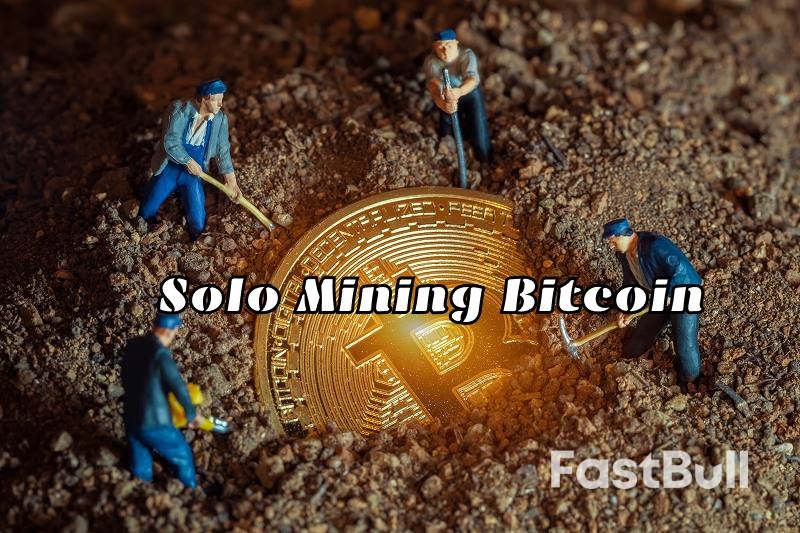
          Miner du Bitcoin en solo ou en pool : lequel est le plus rentable en 2025 ?

          Miner du Bitcoin en solo en 2025 : retour sur investissement. Est-ce vraiment si difficile ?_1

          Le minage de Bitcoin en solo est devenu de plus en plus rare, les pools de minage industriels dominant le réseau en 2025. Pourtant, certains mineurs recherchent encore l'indépendance et le potentiel de gains maximaux du minage individuel. Ce guide explique le fonctionnement du minage en solo aujourd'hui, sa complexité croissante et s'il reste possible pour les particuliers d'en tirer profit.

          Qu'est-ce que le minage de Bitcoin en solo ?

          Le minage de bitcoins en solo consiste à tenter de miner des blocs Bitcoin indépendamment, sans rejoindre un pool de minage. En minant en solo, vous êtes en compétition directe avec l'ensemble du réseau mondial de mineurs pour résoudre des problèmes cryptographiques complexes. Si vous trouvez un bloc, vous recevez la récompense complète (actuellement 6,25 BTC plus les frais de transaction), mais vous supportez seul tous les coûts de calcul et les risques.

          Comment fonctionne le minage en solo

          Le minage de bitcoins en solo repose sur le mécanisme de consensus de preuve de travail (PoW) de Bitcoin. Votre matériel de minage hache de manière répétée les données d'en-tête des blocs, à la recherche d'une valeur de hachage qui atteigne le niveau de difficulté requis par le réseau. Il s'agit essentiellement d'une loterie informatique : plus votre puissance de hachage augmente vos chances, mais ne les garantit pas.

          Voici ce qui se passe lors du minage de bitcoins en solo :

          • Votre plateforme de minage se connecte à un nœud complet Bitcoin que vous exploitez.
          • Le nœud fournit à votre mineur des modèles de blocs candidats contenant des transactions non confirmées
          • Votre mineur ASIC effectue des milliards de calculs de hachage par seconde, à la recherche d'une solution valide.
          • Si vous trouvez un bloc valide, votre nœud le diffuse sur le réseau pour vérification.
          • Une fois la validation effectuée, vous recevrez la récompense de bloc complète directement sur votre portefeuille.

          Contrairement au minage en pool où les récompenses sont distribuées en fonction du travail fourni, le minage en solo fonctionne selon le principe du tout ou rien. Vous pourriez miner pendant des mois, voire des années, sans trouver un seul bloc, ou théoriquement en trouver un dès le premier jour – bien que ce dernier scénario soit extrêmement improbable avec du matériel standard.

          Minage en solo vs minage en pool : principales différences

          Il est essentiel de comprendre les différences fondamentales entre le minage en solo et le minage en pool avant d'investir des ressources dans l'une ou l'autre approche.

          AspectExtraction minière en soloPool Mining
          Distribution des récompenses100 % de la récompense de bloc (6,25 BTC + frais) en cas de succèsPart proportionnelle basée sur la puissance de hachage fournie
          Fréquence de paiementExtrêmement rare, imprévisible (voire jamais)Paiements réguliers (quotidiens à hebdomadaires)
          Stabilité des revenusAucun revenu pendant de longues périodes, puis un versement massifDes rendements constants et prévisibles
          Frais de piscineAucun1 à 3 % des revenus
          Exigences techniquesExécuter un nœud Bitcoin complet, configuration avancéeConnexion simple aux serveurs du pool
          Risque de varianceExtrêmement élevées – des chances comparables à celles de la loterieRendements faibles et lissés chez de nombreux mineurs
          Taux de hachage minimumEn réalité, il faut plus de 100 TH/s pour avoir une chance raisonnable.Tout montant est accepté (même un seul ASIC).

          The economic reality is stark: pool mining provides predictable income that covers electricity costs and generates steady profit, while solo mining bitcoin resembles buying lottery tickets with your electricity bill. Most rational miners choose pools because consistent returns allow for business planning, equipment maintenance, and risk management.

          How Hard Is Solo Bitcoin Mining in 2025?

          The difficulty of solo mining bitcoin has reached unprecedented levels in 2025. To understand just how challenging it has become, we need to examine the current network conditions and calculate your realistic probability of success.

          Current Bitcoin Network Difficulty

          Bitcoin's mining difficulty adjusts every 2,016 blocks (approximately every two weeks) to maintain a consistent 10-minute block time. As of 2025, the network difficulty has increased dramatically compared to Bitcoin's early years, making solo mining exponentially harder than it was even a few years ago.

          Key network statistics that impact solo mining difficulty:

          • Total network hashrate exceeds 600 exahashes per second (EH/s), representing the combined computing power of millions of ASIC miners worldwide
          • Mining difficulty has increased over 100 trillion times since Bitcoin's launch in 2009
          • Industrial mining operations with hundreds of petahashes dominate the network, making individual miners statistically insignificant
          • The average time between blocks remains 10 minutes, but this is distributed across the entire global mining network

          This difficulty level means that even a state-of-the-art ASIC miner running at 100 terahashes per second (TH/s) represents only 0.000017% of the total network hashrate. You're competing against massive mining farms with thousands of machines operating in regions with cheap electricity.

          Your Actual Chances of Mining a Block Solo

          Mathematics reveals the harsh reality of bitcoin solo mining success. Your probability of finding a block depends entirely on your hashrate relative to the total network hashrate.

          Here's the probability calculation for different hardware scenarios:

          Your Hashrate% of NetworkExpected Time to Find 1 BlockProbability per Day
          100 TH/s (1 high-end ASIC)0.000017%~11.4 years0.024%
          500 TH/s (5 ASICs)0.000083%~2.3 years0.12%
          1 PH/s (10 ASICs)0.00017%~14 months0.24%
          10 PH/s (100 ASICs)0.0017%~42 days2.4%
          100 PH/s (1000 ASICs)0.017%~4.2 days24%

          These are expected averages based on probability. The actual time could be much shorter or significantly longer due to the random nature of mining. You might find a block on your first day (probability near zero) or mine for triple the expected time without success—both scenarios have occurred in practice.

          For perspective, if you run a single high-end ASIC costing $3,000-$5,000 with electricity expenses around $150-$300 monthly, you could spend $20,000+ on electricity over the expected 11.4 years before finding your first block. Even if successful, the block reward might not cover your accumulated costs, especially considering hardware depreciation and potential Bitcoin price fluctuations.

          Real Success Stories (and Failures)

          Despite astronomical odds, solo bitcoin mining pool victories do occasionally occur—but context matters enormously when evaluating these rare successes.

          Notable recent success cases include:

          • In January 2024, a solo miner with approximately 120 TH/s successfully mined a block, earning 6.25 BTC plus transaction fees (worth roughly $270,000 at that time). However, this miner had been attempting solo mining for over a year, with electricity costs likely exceeding $15,000 during that period.
          • A small mining operation with around 400 TH/s found a block in mid-2023 after seven months of continuous mining. While profitable on paper, they calculated that pool mining during the same period would have generated nearly the same revenue with zero risk of complete failure.
          • Several hobbyist miners report bitcoin solo mining success after running old S9 ASICs for multiple years—but when accounting for electricity costs and hardware investment, most actually operated at a net loss compared to simply buying Bitcoin directly.

          The failure stories are far more common but rarely discussed:

          • Thousands of miners attempt solo mining annually with modest hashrates (10-100 TH/s) and abandon the effort after 6-12 months of zero returns and mounting electricity bills
          • Several documented cases exist of miners spending $50,000+ on equipment and electricity over 2-3 years without finding a single block
          • The vast majority of solo mining attempts end in financial loss, with miners eventually switching to pools or exiting mining entirely

          Even success stories often reveal that pool mining would have been more profitable when considering risk-adjusted returns. The psychological appeal of potentially winning a full block reward clouds the mathematical reality that consistent pool returns typically generate superior outcomes over time.

          Hardware Requirements for Solo Bitcoin Mining

          Successfully mining bitcoins solo demands significant hardware investment and infrastructure planning. Unlike pool mining where even modest equipment can generate some returns, solo mining requires substantial computational power to have any realistic chance of finding a block within a reasonable timeframe.

          ASIC Miners: What You Need

          Application-Specific Integrated Circuit (ASIC) miners are the only viable hardware for solo bitcoin mining in 2025. Graphics cards (GPUs) and CPUs became obsolete for Bitcoin mining years ago due to efficiency limitations. Modern ASIC miners are purpose-built for the SHA-256 algorithm that Bitcoin uses, delivering hashrates that general-purpose hardware cannot match.

          Current top-tier ASIC miners for solo mining consideration:

          ModelHashratePower ConsumptionEfficiencyApproximate Cost
          Antminer S21200 TH/s3,500W17.5 J/TH$5,000-$7,000
          Whatsminer M60172 TH/s3,344W19.4 J/TH$4,500-$6,500
          Antminer S19 XP140 TH/s3,010W21.5 J/TH$3,500-$5,000
          AvalonMiner 1466150 TH/s3,500W23.3 J/TH$4,000-$5,500

          For solo mining to be remotely feasible, you realistically need at least 500 TH/s to 1 PH/s of total hashrate. This translates to investing in 3-5 high-end ASIC miners, with an initial hardware outlay of $15,000 to $35,000. Even at this investment level, your expected time to find a block remains between 1-3 years under current network conditions.

          Critical factors when selecting ASIC hardware:

          • Energy efficiency matters tremendously for long-term operations—a few joules per terahash difference can mean thousands in annual electricity costs
          • Newer models offer better efficiency but command premium prices, while older models are cheaper but consume more power per hash
          • Consider used ASIC markets cautiously—mining hardware degrades over time, and warranty coverage is often limited or nonexistent
          • Noise levels are substantial (70-90 decibels)—these machines require dedicated space with sound insulation for residential settings
          • Heat generation is massive—each miner produces 3,000-3,500 watts of heat that must be managed through ventilation or cooling systems

          Some miners explore solar powered bitcoin mining to offset electricity costs, though this requires additional investment in solar panels, inverters, and battery storage systems. A typical ASIC drawing 3,500 watts continuously needs approximately 12-15 kilowatts of solar panel capacity (accounting for efficiency losses and nighttime operations), adding $10,000-$20,000 to your initial investment per miner.

          Electricity and Infrastructure Costs

          Electricity represents the ongoing operational expense that determines whether solo bitcoin mining remains financially viable. Unlike the one-time hardware purchase, electricity costs accumulate continuously and often exceed hardware investment over extended mining periods.

          Understanding your electricity costs:

          Hardware SetupTotal Power DrawMonthly kWhCost at $0.10/kWhCost at $0.15/kWh
          1 ASIC (200 TH/s)3,500W2,520 kWh$252$378
          3 ASICs (600 TH/s)10,500W7,560 kWh$756$1,134
          5 ASICs (1 PH/s)17,500W12,600 kWh$1,260$1,890
          10 ASICs (2 PH/s)35,000W25,200 kWh$2,520$3,780

          Beyond electricity, infrastructure requirements add substantial costs:

          • Electrical infrastructure upgrades—residential circuits typically cannot handle multiple ASICs drawing 15-20 amps each; professional electrician services to install 240V circuits and proper breaker capacity can cost $2,000-$5,000
          • Cooling and ventilation systems—industrial fans, ducting, and exhaust systems to prevent overheating, typically adding $1,000-$3,000 depending on space configuration
          • Network infrastructure—stable, high-uptime internet connection and potentially backup connectivity; running a full Bitcoin node requires significant bandwidth and storage
          • Physical space costs—dedicated room or facility with proper ventilation, fire suppression considerations, and security measures
          • Monitoring systems—remote monitoring equipment to track temperatures, hashrates, and downtime alerts, adding $200-$500

          Solar bitcoin mining can reduce operational costs, but requires substantial upfront investment and depends heavily on geographic location. Areas with optimal sun exposure (Southwest United States, parts of Australia, Middle East) provide better ROI for solar installations. However, battery storage systems necessary for 24/7 mining operations significantly increase costs—a battery bank capable of running 5 ASICs overnight might cost $15,000-$30,000 alone.

          Insurance and maintenance represent ongoing expenses often overlooked by new miners. ASIC miners require regular cleaning, fan replacements, and occasional repairs. Budget approximately 5-10% of hardware value annually for maintenance and unexpected component failures.

          Solo Mining Bitcoin: ROI Analysis

          Return on investment calculations for solo bitcoin mining reveal why most rational actors choose pool mining instead. While the potential for a massive one-time payout exists, the mathematical expected value typically favors consistent pool returns when accounting for risk, time value of money, and operational complexities.

          Cost vs Potential Reward

          A comprehensive cost analysis exposes the financial reality of solo mining attempts. Let's examine a realistic scenario with specific numbers to illustrate the economic challenge.

          Example scenario: 1 PH/s solo mining operation (5 high-end ASICs)

          Cost CategoryInitial InvestmentMonthly RecurringAnnual Total
          ASIC Hardware (5 miners)$30,000——
          Infrastructure Setup$5,000——
          Electricity (at $0.12/kWh)—$1,512$18,144
          Internet Maintenance—$150$1,800
          Hardware Depreciation——$7,500
          Total First Year$35,000$1,662$62,444

          Expected outcome analysis:

          • With 1 PH/s, expected time to find one block: approximately 14 months under current network difficulty
          • Block reward if successful: 6.25 BTC + transaction fees (approximately 0.1-0.3 BTC), totaling roughly 6.35-6.55 BTC
          • Bitcoin price assumption: $60,000 per BTC (conservative 2025 estimate)
          • Expected reward value: $381,000-$393,000
          • Total costs over 14 months: approximately $58,317
          • Net profit if successful: $322,683-$334,683

          This appears attractive on paper, but several critical risk factors undermine this optimistic scenario:

          • The 14-month timeframe is an average expectation—actual time could be 3 months or 4 years due to probability variance
          • If you don't find a block within 24 months, you've spent $74,732 with zero return, potentially forcing you to abandon the operation at a total loss
          • Network difficulty continuously increases, reducing your probability over time as more hashrate joins the network
          • Hardware depreciation accelerates—ASICs lose 50-70% of resale value after 12-18 months of operation
          • Bitcoin price volatility creates enormous uncertainty; if BTC drops to $40,000, your expected reward falls to $254,000-$262,000, barely doubling your investment after 14+ months of risk

          The probability distribution matters enormously. You have roughly a 30% chance of finding zero blocks in 20 months, a scenario where you lose your entire $70,000+ investment. Conversely, you have about a 5% chance of finding a block within 2 months, generating exceptional returns. This risk profile resembles venture capital investing or gambling rather than traditional business operations.

          Solo Mining vs Pool Mining Profitability

          Comparing identical hardware operating in solo versus pool mining modes reveals the fundamental economic trade-off between variance and expected value.

          Using the same 1 PH/s setup over 14 months:

          MetricSolo MiningPool Mining
          Expected Blocks Found1 block (average)N/A (proportional shares)
          Expected Revenue$381,000-$393,000$385,000
          Pool Fees$0$7,700 (2%)
          Net Mining Revenue$381,000-$393,000$377,300
          Operating Costs$58,317$58,317
          Net Profit$322,683-$334,683$318,983
          Revenue CertaintyHigh variance (might be $0)99%+ certainty
          Cash FlowZero for months, then lump sumDaily/weekly payouts

          The expected value difference is minimal—solo mining potentially saves 2% in pool fees, translating to roughly $3,700-$15,700 more profit over 14 months. However, this marginal advantage disappears when considering:

          • Risk-adjusted returns heavily favor pool mining—consistent income allows you to cover electricity costs, service debts, and reinvest profits without depending on a single probabilistic event
          • Cash flow management becomes impossible with solo mining; you cannot pay monthly electricity bills with hypothetical future block rewards, potentially forcing you to fund operations from external sources or abandon the effort before success
          • Psychological stress of operating at zero revenue for months or years often leads solo miners to quit prematurely, realizing losses that pool mining would have avoided
          • Pool mining allows scaling flexibility—you can start with one ASIC, verify profitability, and expand gradually; solo mining demands massive upfront commitment to achieve reasonable success probability

          The solo bitcoin mining pool concept has emerged as a middle-ground option, where miners contribute hashrate to a pool that attempts solo mining on behalf of participants. If the pool finds a block, rewards distribute proportionally among contributors. This reduces individual variance while maintaining some solo mining characteristics, though it doesn't eliminate the fundamental probability challenges of competing against the entire network.

          Bitcoin Price Impact on Profitability

          Bitcoin's notorious price volatility introduces another layer of complexity to solo mining ROI calculations. Unlike pool mining where you can sell rewards regularly to lock in prices, solo mining forces you to bet on Bitcoin's value at an unknowable future date when you might find a block.

          Price scenario analysis for 1 PH/s operation finding a block after 14 months:

          BTC Price ScenarioBlock Reward ValueTotal CostsNet Profit/LossROI
          $100,000 (bull case)$635,000$58,317+$576,683989%
          $80,000 (optimistic)$508,000$58,317+$449,683771%
          $60,000 (moderate)$381,000$58,317+$322,683553%
          $40,000 (pessimistic)$254,000$58,317+$195,683336%
          $25,000 (bear market)$158,750$58,317+$100,433172%

          Even in pessimistic price scenarios, finding a block generates positive returns—but this analysis assumes you successfully find a block. The compounding risk involves both probability (might never find a block) and price uncertainty (block might be worth less than expected).

          Additional price-related considerations:

          • If Bitcoin price crashes during your mining period, continuing operations might become unprofitable even if you eventually find a block—$25,000 BTC means each month of operation costs $1,512 while the expected value of your mining drops proportionally
          • Pool miners can implement dollar-cost-averaging strategies by selling portions of daily earnings, reducing exposure to price crashes; solo miners hold all risk until block discovery
          • Rising Bitcoin prices increase mining competition as more hashrate comes online seeking profits, paradoxically reducing your probability of bitcoin solo mining success even as potential rewards increase
          • Market timing becomes critical for solo mining; starting during bear markets when difficulty is lower and prices depressed could yield higher ROI if you find a block during subsequent recovery

          The optimal strategy for most miners involves pool mining to generate steady income while Bitcoin price remains uncertain, then potentially switching to solo mining only if accumulating significant hashrate (10+ PH/s) that makes probability of success reasonable within specific timeframes. Attempting solo mining with modest hashrate essentially converts your mining operation into a speculative bet on both probability and future Bitcoin valuation—a dual-risk proposition that sophisticated investors typically avoid.

          How to Start Solo Mining Bitcoin (Step-by-Step)

          Setting up a solo mining operation requires technical knowledge beyond simply connecting hardware to a pool. You'll need to run your own Bitcoin node, configure mining software, and maintain reliable infrastructure. This section walks through the essential steps for anyone determined to attempt mining bitcoins solo despite the challenging odds.

          Software Setup

          The foundation of any solo mining operation is a fully synchronized Bitcoin Core node. Unlike pool mining where the pool operator manages blockchain data, solo miners must maintain their own complete copy of the Bitcoin blockchain and validate all transactions independently.

          Step-by-step Bitcoin Core installation:

          • Download Bitcoin Core from the official bitcoin.org website—verify the download signature to ensure file authenticity and avoid malware
          • Install Bitcoin Core on a computer with at least 500GB of available storage (the blockchain exceeds 450GB and grows continuously)
          • Allow the initial blockchain synchronization to complete, which typically takes 24-72 hours depending on internet speed and hardware performance
          • Configure your bitcoin.conf file to enable mining functionality by adding the parameters: server=1, rpcuser=yourusername, rpcpassword=yourpassword, and rpcallowip=192.168.1.0/24 (adjust IP range to match your local network)
          • Restart Bitcoin Core to apply configuration changes and verify RPC interface is accessible

          Mining software configuration comes next. Several options exist for solo bitcoin mining, each with different features and compatibility:

          SoftwareBest ForKey FeaturesDifficulty Level
          CGMinerAdvanced usersHighly customizable, supports multiple hardware typesHigh
          BFGMinerASIC minersDynamic clocking, monitoring, remote interfaceHigh
          Braiins OS+Antminer hardwareFirmware replacement with optimization featuresMedium
          Solo CK PoolBeginners wanting solo experienceSimplified solo mining without running full nodeLow

          For true solo mining, CGMiner or BFGMiner connected to your local Bitcoin Core node provides complete control. Configure your mining software with these essential parameters:

          • Point the software to your Bitcoin Core RPC interface (typically localhost:8332)
          • Provide RPC authentication credentials matching your bitcoin.conf configuration
          • Set your Bitcoin wallet address where block rewards will be sent if you successfully mine a block
          • Configure intensity and workload settings appropriate for your ASIC hardware model
          • Enable temperature monitoring and automatic shutdown thresholds to prevent hardware damage

          Alternative approach for those wanting to avoid full node complexity: solo bitcoin mining pool services like Solo CK Pool allow you to attempt solo mining by connecting your hardware to their infrastructure. You maintain the solo mining reward structure (keeping 100% of any block found minus a small fee), but delegate the technical burden of running a node. This reduces setup complexity but introduces minor centralization and trust requirements.

          Connecting Your ASIC Miner

          Once your software infrastructure is ready, connecting ASIC hardware involves both physical setup and network configuration. Modern ASICs include built-in web interfaces that simplify configuration compared to earlier generations of mining hardware.

          Physical connection process:

          • Position your ASIC in a location with adequate ventilation—these devices generate extreme heat and require constant airflow; enclosed spaces without cooling will cause thermal shutdown or hardware damage within minutes
          • Connect the power supply unit (PSU) to your ASIC, ensuring you're using the correct voltage (typically 220V for optimal efficiency) and that your electrical circuit can handle the amperage load
          • Attach an Ethernet cable from your ASIC to your local network router—WiFi is not recommended for mining operations due to stability and latency concerns
          • Power on the device and wait 2-3 minutes for the boot sequence to complete

          Network configuration through ASIC web interface:

          • Locate your ASIC's IP address through your router's device list or use scanning tools like Advanced IP Scanner
          • Access the web interface by entering the IP address in your browser (default credentials are usually admin/admin or root/root—change these immediately for security)
          • Navigate to the mining pool configuration section
          • Enter your Bitcoin Core node address as Pool 1: stratum+tcp://your-node-ip:8332
          • Input your RPC username and password in the worker credentials fields
          • Add backup pools (either other solo options or a traditional pool) to prevent downtime if your primary node experiences issues
          • Save configuration and restart the miner to apply changes

          Verification steps to confirm successful connection:

          • Check the ASIC dashboard for active hashrate—you should see your device reporting its expected TH/s within 5-10 minutes of starting
          • Monitor your Bitcoin Core debug log for incoming share submissions from your miner
          • Verify that all hashing boards are operational—ASICs typically have 3 boards that should all show active temperature and hashrate readings
          • Confirm network latency remains low (under 50ms) to minimize stale shares and maximize efficiency

          Common troubleshooting issues include incorrect RPC credentials, firewall blocking connections between miner and node, or insufficient PSU power delivery causing hashboard failures. Most ASIC manufacturers provide detailed logs through the web interface that help diagnose connectivity problems.

          Monitoring Your Mining Operation

          Continuous monitoring separates successful mining operations from costly failures. Hardware issues, network disruptions, or configuration problems can silently drain electricity for days while generating zero useful work. Implementing robust monitoring systems provides early warning of problems and maximizes your already-slim chances of bitcoin solo mining success.

          Essential metrics to monitor continuously:

          • Hashrate consistency—your reported hashrate should remain within 5% of the ASIC's rated specification; significant drops indicate hardware degradation, overheating, or connectivity issues
          • Temperature readings across all boards—optimal operating temperature ranges from 60-75°C; sustained temperatures above 80°C accelerate hardware failure and may trigger automatic shutdowns
          • Fan speeds and performance—fans should maintain consistent RPMs; declining fan speed often precedes complete failure and potential hardware damage from overheating
          • Network uptime and latency—mining effectiveness depends on constant connectivity to your Bitcoin node; even brief disconnections mean wasted electricity and missed opportunities
          • Bitcoin Core node synchronization—your node must remain fully synchronized with the network; falling behind by even a few blocks means you're mining on outdated data and cannot successfully find valid blocks

          Monitoring tools and platforms:

          ToolTypeKey FeaturesCost
          Awesome MinerSoftware suiteMulti-device monitoring, alerts, remote managementFree (limited) / $200+ (pro)
          Hive OSOperating systemComprehensive dashboard, mobile app, auto-tuningFree (3 devices) / $3/device/month
          MinerStatWeb platformCloud monitoring, profit switching, alerts$2-4/device/month
          Built-in ASIC interfaceHardware nativeBasic stats, logs, configurationFree (included)

          Setting up effective alert systems prevents costly extended downtime:

          • Configure email or SMS notifications for hashrate drops below 90% of expected performance
          • Set temperature alerts at 75°C (warning) and 82°C (critical) thresholds
          • Enable alerts for miner disconnections lasting more than 5 minutes
          • Monitor your Bitcoin wallet address for block reward deposits—the moment you've been waiting months for
          • Track electricity consumption through smart meters or monitoring devices to detect abnormal power usage that might indicate hardware problems

          For operations using solar powered bitcoin mining, additional monitoring becomes essential. Track solar panel output, battery charge levels, and grid consumption to optimize your energy mix. Solar monitoring systems should alert you when battery reserves drop below thresholds needed to maintain 24/7 operation, allowing you to temporarily reduce mining intensity or switch to grid power during extended cloudy periods.

          Regular maintenance schedules complement automated monitoring. Monthly tasks should include physically inspecting your ASICs for dust accumulation, verifying all fans spin freely, checking cable connections remain secure, and reviewing performance trends to identify gradual degradation before catastrophic failure occurs. Quarterly deep cleaning with compressed air prevents dust buildup that reduces cooling efficiency and shortens hardware lifespan.

          Documentation practices help optimize long-term operations. Maintain logs of hashrate performance, downtime incidents, maintenance activities, and electricity costs. This data proves invaluable for calculating actual ROI, identifying patterns in hardware behavior, and making informed decisions about when to upgrade equipment or abandon unprofitable operations.

          FAQs about Solo Mining Bitcoin

          1. Is solo mining Bitcoin possible?

          Yes, solo mining Bitcoin is still possible in 2025, but success chances are extremely low due to the high network difficulty and dominance of industrial-scale miners.

          2. How long does it take to solo mine 1 Bitcoin?

          Avec un seul mineur ASIC haut de gamme, il peut falloir en moyenne plus de 10 ans pour trouver un bloc. Même les configurations importantes peuvent attendre des mois, voire des années, sans succès.

          3. Combien gagnent les mineurs de Bitcoin indépendants ?

          La plupart des mineurs solitaires ne gagnent rien à moins de trouver un bloc complet. En cas de succès, les récompenses peuvent dépasser 300 000 $ selon le cours du Bitcoin et les frais.

          4. Le minage en solo est-il légal ?

          Oui, le minage en solo est légitime et conforme à la conception décentralisée du Bitcoin. Cependant, les chances d'une rentabilité constante sont très faibles pour la plupart des particuliers.

          Conclusion

          Miner du Bitcoin en solo en 2025 reste techniquement possible, mais extrêmement difficile. Cela exige un investissement conséquent, une alimentation électrique constante et une volonté de prendre des risques à long terme pour des gains incertains. Bien que cette méthode séduise ceux qui valorisent l'indépendance et la décentralisation, la plupart des mineurs trouvent le minage en pool bien plus pratique et rentable.

          Avertissements sur les risques et avertissements en matière d'investissement
          Vous comprenez et reconnaissez que le trading avec des stratégies comporte un degré élevé de risque. Suivre des stratégies ou des méthodologies d’investissement entraîne un risque de perte. Le contenu du site est fourni par nos contributeurs et analystes à titre informatif uniquement. Vous êtes seul responsable de déterminer si des actifs de négociation, des titres, une stratégie ou tout autre produit vous conviennent en fonction de vos objectifs d'investissement et de votre situation financière.
          Favoris
          Partager
          FastBull
          Droits d'auteur © 2026 FastBull Ltd

          728 RM B 7/F GEE LOK IND BLDG NO 34 HUNG TO RD KWUN TONG KLN HONG KONG

          TelegramInstagramTwitterfacebooklinkedin
          App Store Google Play Google Play
          Produits
          Graphiques

          Chat

          F&Q avec des Experts
          Filtres
          Calendrier économique
          Données
          Outil
          FastBull VIP
          Fonctionnalités
          Fonction
          Citations
          Copy Trading
          Signaux AI
          Concours
          24/7
          Analyse
          Education
          Société
          Embauche
          À propos de nous
          Contactez-nous
          Publicité
          Centre d'aide
          Commentaires
          Accord d'utilisation
          Politique de confidentialité
          Déclaration de Protection des Informations Personnelles de
          Entreprise

          Marque blanche

          Broker API

          API de données

          Plug-ins Web

          Créateur d'affiches

          Programme d'affiliation

          Divulgation des risques

          Le risque de perte dans la négociation d'instruments financiers tels que les actions, les devises, les matières premières, les contrats à terme, les obligations, les ETF et les crypto-monnaies peut être substantiel. Vous pouvez subir une perte totale des fonds que vous déposez auprès de votre courtier. Par conséquent, vous devez examiner attentivement si ce type de négociation vous convient, compte tenu de votre situation et de vos ressources financières.

          Aucune décision d'investissement ne doit être prise sans avoir procédé soi-même à une vérification préalable approfondie ou sans avoir consulté ses conseillers financiers. Le contenu de notre site peut ne pas vous convenir car nous ne connaissons pas votre situation financière et vos besoins en matière d'investissement. Nos informations financières peuvent avoir un temps de latence ou contenir des inexactitudes, de sorte que vous devez être entièrement responsable de vos décisions en matière de négociation et d'investissement. La société ne sera pas responsable de vos pertes en capital.

          Sans l'autorisation du site web, vous n'êtes pas autorisé à copier les graphiques, les textes ou les marques du site web. Les droits de propriété intellectuelle sur le contenu ou les données incorporées dans ce site web appartiennent à ses fournisseurs et marchands d'échange.

          Non connecté

          Se connecter pour accéder à d'autres fonctionnalités

          Se connecter au Broker
          Devenez un fournisseur de signaux
          Centre d'aide
          service client
          Mode sombre
          Couleurs prix

          Se connecter

          S'inscrire

          Position
          Mise en page
          Plein écran
          Par défaut sur le graphique
          La page du graphique s'ouvre par défaut lors de la visite de fastbull.com